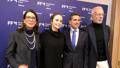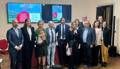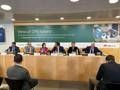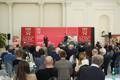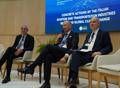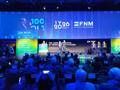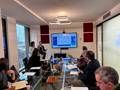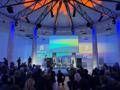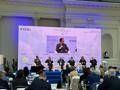




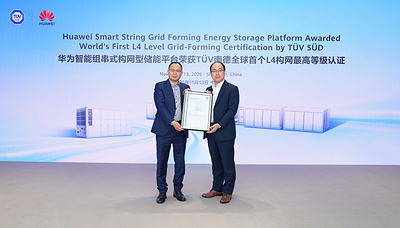
SHENZHEN, China, Nov. 24, 2026 /PRNewswire/ -- TÜV SÜD officially released the White Paper on Capability and Performance Grading for Grid Forming Energy Storage Units and Systems. TÜV SÜD also awarded Huawei's Smart String Grid Forming ESS Platform the world's first L4 certification for the highest grid-forming capability. This is the first time, globally, that an energy storage system has passed the L4 grid-forming capability certification. This marks the transition of grid-forming energy storage from technical verification to a new phase of industry maturity, where it is standardized, quantifiable, and certifiable. This certification sets a new benchmark for the stability and resilience of power systems with a high penetration of renewable energy.
Grid-Forming Energy Storage Is Evolving Toward System Support, and a Unified Framework for Capability Evaluation Is Urgently Needed
The proportion of renewable energy and power electronics devices in power systems continues to increase. As a result, new technology-based resources must gradually take over the inertia, voltage support, power oscillation damping, and other stability capabilities provided by traditional synchronous generators. Grid-forming energy storage systems integrate energy regulation with active grid-support capabilities. They are evolving from traditional energy storage devices into important stability resources for new power systems.
At the same time, different devices vary significantly in support scope, dynamic performance, islanding operation, and system restoration. The industry urgently needs a clear evaluation framework to answer "what grid-forming capabilities are available, what level they can reach, and how much system responsibility can be taken on."
Five-Level Grid-Forming Capability System: Making System Contributions Measurable and Verifiable
The newly released white paper proposes a five-level grid-forming capability maturity model, from L0 to L4. This model centers its evaluation on the actual contributions of devices and plants to the power system. It also clearly defines the capability evolution path from traditional grid-following through local voltage grid-forming, regional auxiliary grid-forming, and conditional full-domain grid-forming, to advanced full-domain grid-forming. The evaluation focus has expanded from whether a single function is available to the coverage of capabilities, performance levels, verification levels, and contributions to system resilience. This enables evidence-based assessment of different grid-forming capabilities and the selection of appropriate levels for varying application requirements.
The white paper focuses on core capabilities such as grid formation, frequency support, voltage support, system strength support, and fault support. Considering factors such as response speed, support strength, and operating boundaries, it drives grid-forming evaluation from functional descriptions toward measurable performance verification. It also extends verification requirements from individual devices to plants.
From L0 to L4: Grid-Forming Capability Steps Up Level by Level
Based on the actual contributions of devices and plants to the power system, the white paper divides grid-forming capability into five levels:
Huawei Receives L4 Certification: System-Level Grid-Forming Capabilities Gain Third-Party Recognition
L4 "Advanced Full-Domain Grid-Forming" is the highest level in this model. In addition to voltage, frequency, system strength, and fault-support capabilities, it also requires wideband oscillation suppression, complete system restoration, and multi-unit grid-forming coordination capabilities. It focuses on plant-level performance, including advanced black start, seamless on/off-grid switching, and off-grid fault ride-through.
Huawei's Smart String Grid Forming ESS Platform has obtained the L4 certification, indicating that it meets the model's highest requirements for system support, dynamic stability, and coordinated restoration. With this certification, the highest level of grid-forming capability is no longer just part of an evaluation framework but a third-party-certified technical achievement. This also means grid-forming energy storage systems can play a greater role in stabilizing the grid and restoring power during complex disturbances, system separation, and outages. These capabilities lay the groundwork for the operation of future 100% renewable energy power systems.
From technological breakthroughs to capability grading, and from engineering verification to third-party certification, grid-forming energy storage is on a fast track to large-scale application. The release of this white paper and the world's first L4 certification provide the industry with clear capability reference points and a basis for application. This will further drive the coordinated development of equipment, standards, engineering, and markets, and help build safer, more stable, and more resilient new power systems.
View original content to download multimedia:https://www.prnewswire.co.uk/news-releases/huawei-smart-string-grid-forming-ess-platform-receives-the-industrys-first-highest-level-l4-grid-forming-capability-certification-from-tuv-sud-302949202.html
Copyright 2026 PR Newswire. All Rights Reserved.
Comunicato stampa - contenuto promozionale
Responsabilità editoriale PrNewswire.