



SAN JOSÉ, Costa Rica, Dec. 19, 2025 /PRNewswire/ -- Costa Rica has evolved from exporting primarily four traditional products in the early 1980s to placing more than 4,000 goods and services in nearly 150 international markets by 2024, according to a study prepared by the Trade and Investment Promotion Agency of Costa Rica (PROCOMER). The study analyzes the evolution of Costa Rica's export model and documents one of the most profound productive transformations in the country's economic history. This four-decade process has influenced economic growth, job creation, and Costa Rica's capacity to integrate into high-value global supply chains.
The analysis shows that over the past decade, Costa Rican exports grew at an average annual rate of 8% (2014–2024), alongside a structural shift in the composition of the export offering. Advanced manufacturing currently accounts for 84% of the industrial goods macro-sector, while knowledge-intensive services represent 58% of exports within that segment. This evolution reflects a transition toward activities that require greater sophistication, specialized talent, and compliance with international standards.
The study also highlights the impact of foreign trade on the labor market. By 2024, exports generated more than 709,000 jobs, with women representing 43% of total employment and a significant presence outside the Greater Metropolitan Area, where nearly 19% of export activity is located. These figures confirm that export-led growth is not concentrated solely in urban centers or within a single productive profile.
Commenting on this long-term process, Laura López, CEO of PROCOMER, noted that the country's export evolution is the result of sustained decisions and a shared vision between the public and private sectors. "Moving from just four main export products in the early 1980s to more than 4,000 today is evidence of an economy that learned how to transform itself, innovate, and compete in increasingly demanding markets. This study shows how diversification expands opportunities, creates jobs, and strengthens economic development across all regions of the country," she said.
From a historical perspective, the document illustrates how Costa Rica gradually reduced its dependence on traditional exports. By the late 1980s, more than 90% of shipments corresponded to traditional goods; today, that pattern has reversed, with a clear predominance of non-traditional exports linked to advanced manufacturing, differentiated agro-industry, and specialized services. This shift enabled the country to broaden its export portfolio and respond more efficiently to external demand.
Product diversification has been accompanied by a sustained expansion of export markets. The study notes that Costa Rica maintains a solid presence in North America, Europe, Asia, and Latin America, with positive performance in regions that demand higher value-added goods and services. While the United States remains the country's main export destination, growth recorded through September 2025 in Europe (+18%) and Asia (+39%) underscores the importance of a strategy focused on market expansion and reduced concentration.
The analysis identifies opportunities associated with nearshoring, digitalization, the transition to clean energy, and the growth of knowledge-based services—areas in which Costa Rica already has established capabilities. In this context, the study concludes that the country is entering a new stage of its export development, with a broader and more sophisticated productive base and stronger conditions to respond to the demands of international trade in the years ahead.
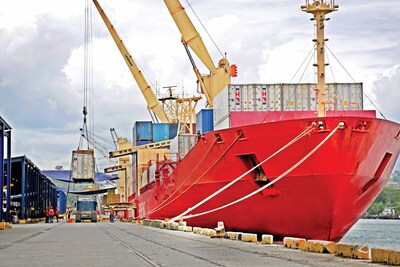
Photo - https://mma.prnewswire.com/media/2849879/Barco_carguero_SIN_NOMBRE.jpg


Comunicato stampa sponsorizzato - Responsabilità editoriale PrNewswire. I giornalisti Adnkronos non sono in nessun modo coinvolti né responsabili per i contenuti dei comunicati trasmessi.